Indianapolis and Marion County, Indiana
Crawl Space Encapsulation for Indianapolis Homes, Season by Season
A sour smell in the back bedroom by July. A kitchen floor you can feel through socks in January. Both often start in the dirt-floored space under the house. This page explains what crawl space encapsulation involves in Indianapolis, what Indiana's code asks of it, and the price ranges national guides publish.
Encapsulation covers the ground under the house with sealed plastic, shuts out outside air and gives the space a way to stay dry. A full job typically runs $1,500 to $15,000 and averages roughly $5,500, per This Old House (2026). Indiana's code adds a drainage rule: the space must slope to a gravity drain or a sump pit.
Why does an Indianapolis crawl space get damp in summer?
Working from NOAA's hourly climate normals (1991–2020) for Indianapolis International Airport, we averaged the outdoor dew point by month: 61.0°F in June, 64.6°F in July and 63.4°F in August. Any surface under the floor that is cooler than that collects water the way a cold glass does: a supply duct full of air-conditioned air, a cold-water line, the masonry and soil that stay cool all summer. A vented crawl space keeps feeding that air in.
Rain keeps the ground wet as well. The same station averages 43.6 inches of precipitation a year, with about 78 days of a tenth of an inch or more, and June is the wettest month at 4.95 inches (NOAA). Damp soil gives off vapor into the space even when the ground looks dry.
And why it matters again in January
NOAA's normals put the average January temperature at 28.5°F and the average January low at 20.9°F. Indiana's code requires a vented crawl space to have an opening within 4 feet of each corner of the building (675 IAC 14-4.4-53), so in a vented space that cold air reaches the water lines and the underside of the floor. A sealed crawl space with insulated walls stays much closer to the temperature of the house above it.
That is also why vents should not simply be stuffed shut. Closing them is one step of a full job, done together with the liner, the drainage and a drying plan.
Work under Indianapolis floors
- Crawl space dehumidifiersSummer dew points, sizing, and the pad and outlet Indiana's code asks for.
- Vapor barriers and linersClass I plastic, 6-inch laps, the gravel-layer option and radon-ready seams.
- Crawl space repairRotted joists and sills, standing water, and what gets fixed before sealing.
- What encapsulation costs in 2026Cost-guide ranges for liners, drying, drains, wood repairs and permits.
Guides for this area
- Radon in a sealed crawl spaceZone 1, Indiana's certification rule, and the order to do the work in.
- What that sign usually meansSmells, cold floors, soft spots, water and drooping insulation, answered.
Crawl space encapsulation and Indiana's code
Indiana builds to the 2020 Indiana Residential Code, the 2018 International Residential Code with state amendments (675 IAC 14-4.4). For a crawl space without vents it asks for a continuous Class I vapor retarder over the exposed earth, with joints overlapped 6 inches and sealed or taped, and edges run at least 6 inches up the wall and sealed.
Indiana then adds a rule of its own. Its Section R408.8 says the space must drain to a gravity discharge or a sump pit at least 18 inches across and 24 inches deep, with the ground sloped at least 1 inch per 10 feet, or half that with 3 inches of gravel-type fill under the plastic. One of the state's approved ways to close a crawl space also calls for insulated walls plus a hard pad and an electrical outlet beside the sump, ready for a dehumidifier. These rules are written for new construction, so for an existing house ask the specialist which parts your job will follow. Our crawl space dehumidifier page explains the pad and outlet.
Older houses, and a radon county
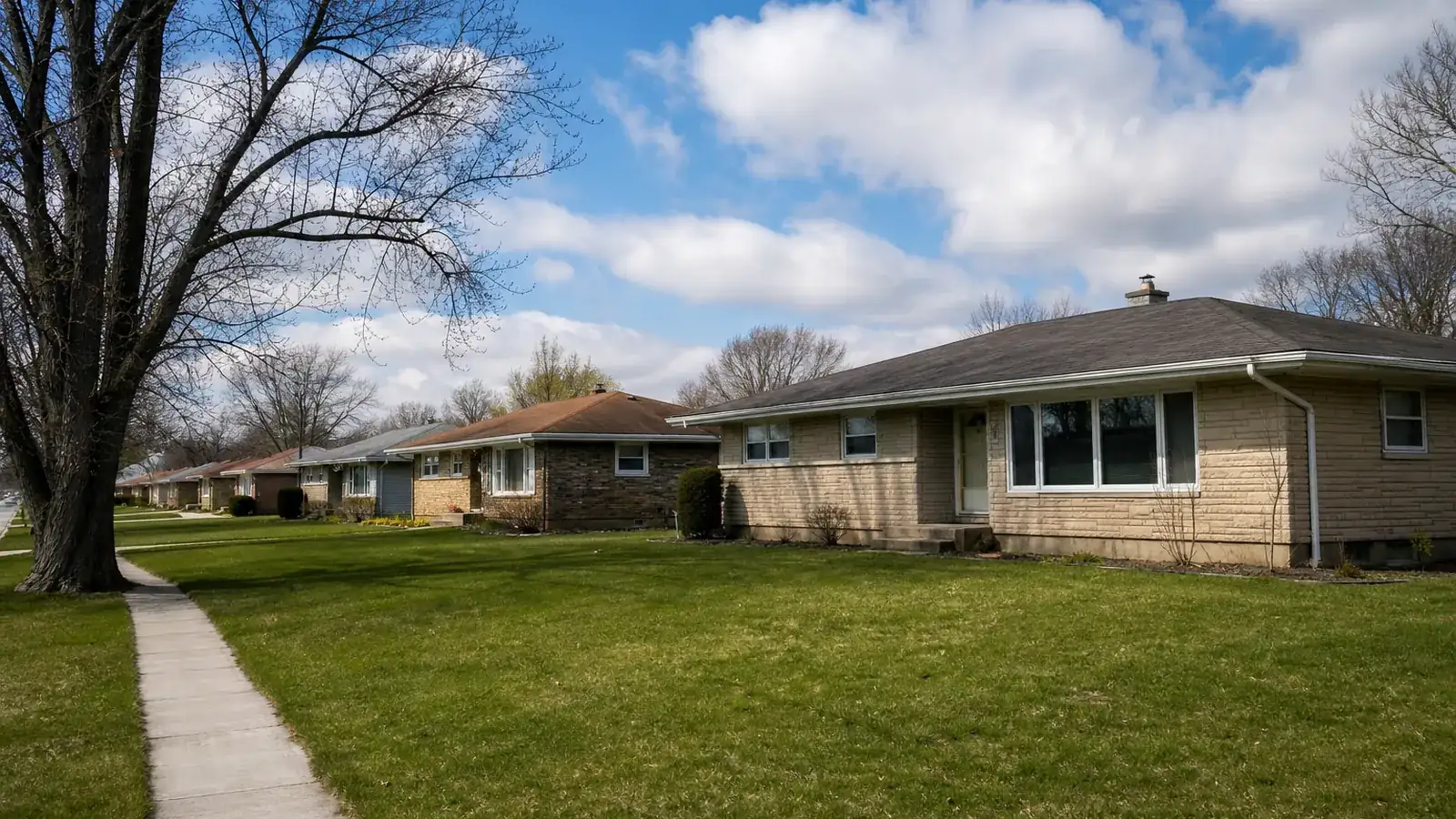
Of Indianapolis's 401,428 homes, 59% were built before 1980 and only 18% in 2000 or later (U.S. Census, ACS 2020–2024). Census tables don't say which homes sit on crawl spaces; the access hatch does. In a house that age, the ground plastic, if any was laid, has had decades to tear and shift.
Marion County is also in Zone 1 on the EPA Map of Radon Zones, the highest-potential tier. The EPA's advice is to test every home, in any zone. Test before the liner goes down, so you know whether the plastic should be built to carry a radon fan later. The radon and sealed crawl space guide covers the order of work.
Who phones you, and what to ask them
Nobody at Indy Crawl Space Pros crawls under houses; this is an information site. Fill in the form and your details reach a single independent specialist in the Indianapolis area, who rings you to talk it over. The Indiana Attorney General's office notes that home improvement contracts over $150 must be in writing. Ask for a written, itemized price that names the liner, the drainage, the drying method and any repairs, and ask how the work meets Indiana's drainage rule. The 2026 crawl space encapsulation cost ranges give you something to measure the total against.
Questions homeowners ask
Is crawl space encapsulation worth the cost?
It depends on what the crawl space is doing now. If there is a musty smell upstairs, sweating ducts, wet insulation or water after storms, sealing addresses the cause. If the space is dry with intact plastic, a smaller fix may be enough. Ask the specialist to show you what they found before quoting.
Can I just shut the vents for winter?
Not on their own. Shut vents with bare soil and no drying plan can trap damp air come spring. In a full encapsulation the vents are closed as part of the job, along with the liner, drainage and insulated walls.
Does a sealed crawl space need a sump pump in Indiana?
It needs a way to drain. Indiana's Section R408.8 calls for a gravity discharge or a sump pit at least 18 inches across and 24 inches deep, placed so a pump can be added if water collects. Whether a pump goes in on day one depends on your lot.
What happens after I send a request?
A single independent specialist in the Indianapolis area receives it and phones you. Expect questions about what you've seen and smelled, then an offer to come and look underneath. That call is the time to ask if there's a charge for the visit.
Sources
- NOAA NCEI U.S. Climate Normals 1991-2020, Indianapolis International Airport (USW00093819)
- U.S. Census Bureau, ACS 2020-2024, Year Structure Built (B25034), Indianapolis city (balance)
- 675 IAC 14-4.4-56, Indiana Section R408.8 under-floor drainage
- EPA Map of Radon Zones, Indiana
- Indiana Attorney General, Consumer Protection Division: written home improvement contracts
Describe the crawl space in a sentence or two
Pick the closest match, then add what you noticed: a smell upstairs, water on the plastic after a storm, a floor that gives underfoot. A crawl space specialist who works in Indianapolis phones you to talk it through.